



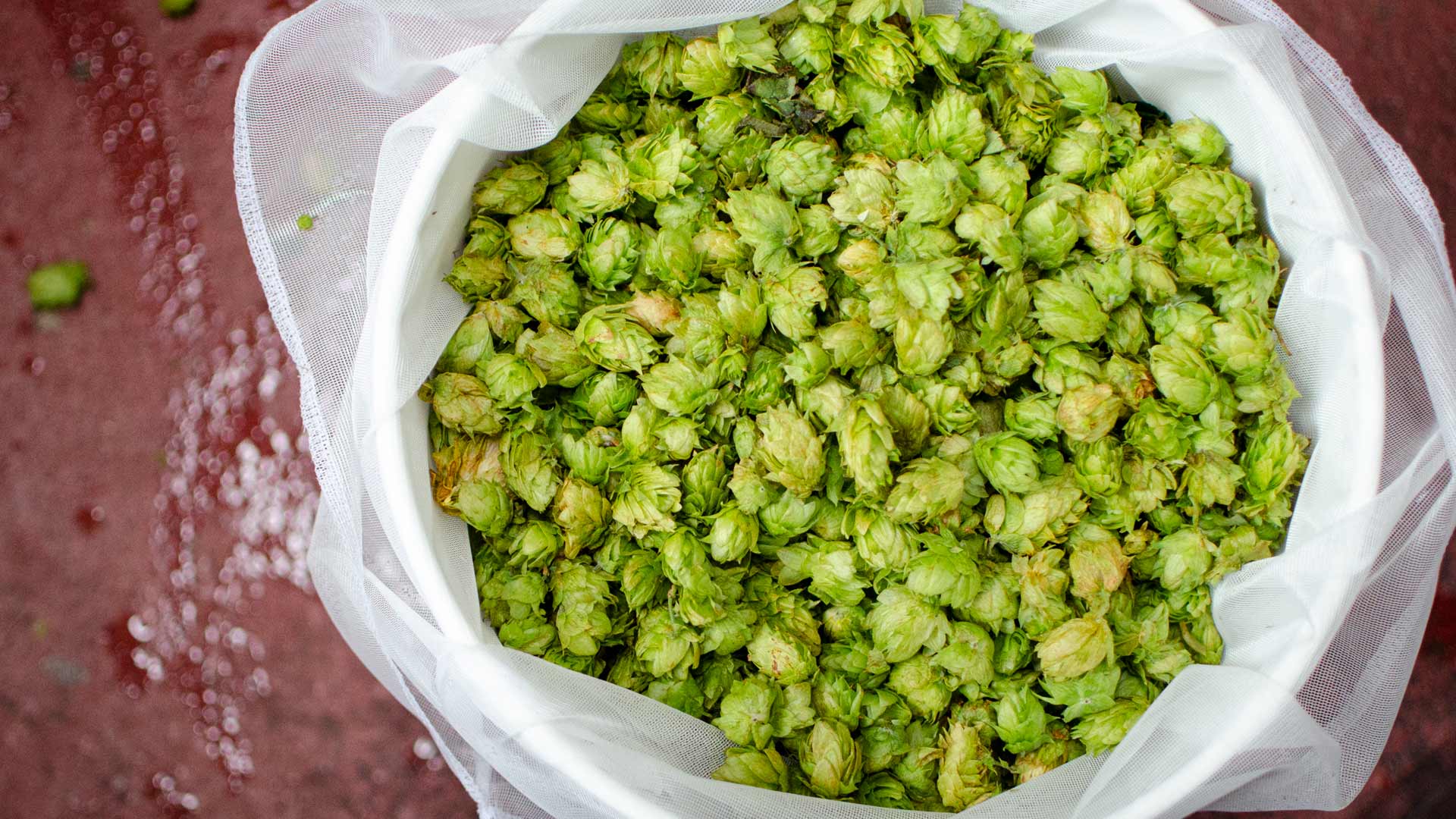

In September I would normally be traveling to the Yakima Valley in Washington to select hops. We contract a certain quantity of hops each year during harvest season. Our broker presents us with various lots from different growers, and we pick based on criteria for the hop we’re selecting. Sometimes it’s purely “I love how this smells,” sometimes it’s very brand-specific (ask us what a “1500 Simcoe” is), and usually it’s somewhere in-between.
A NEW HOP SELECTION PROCESS
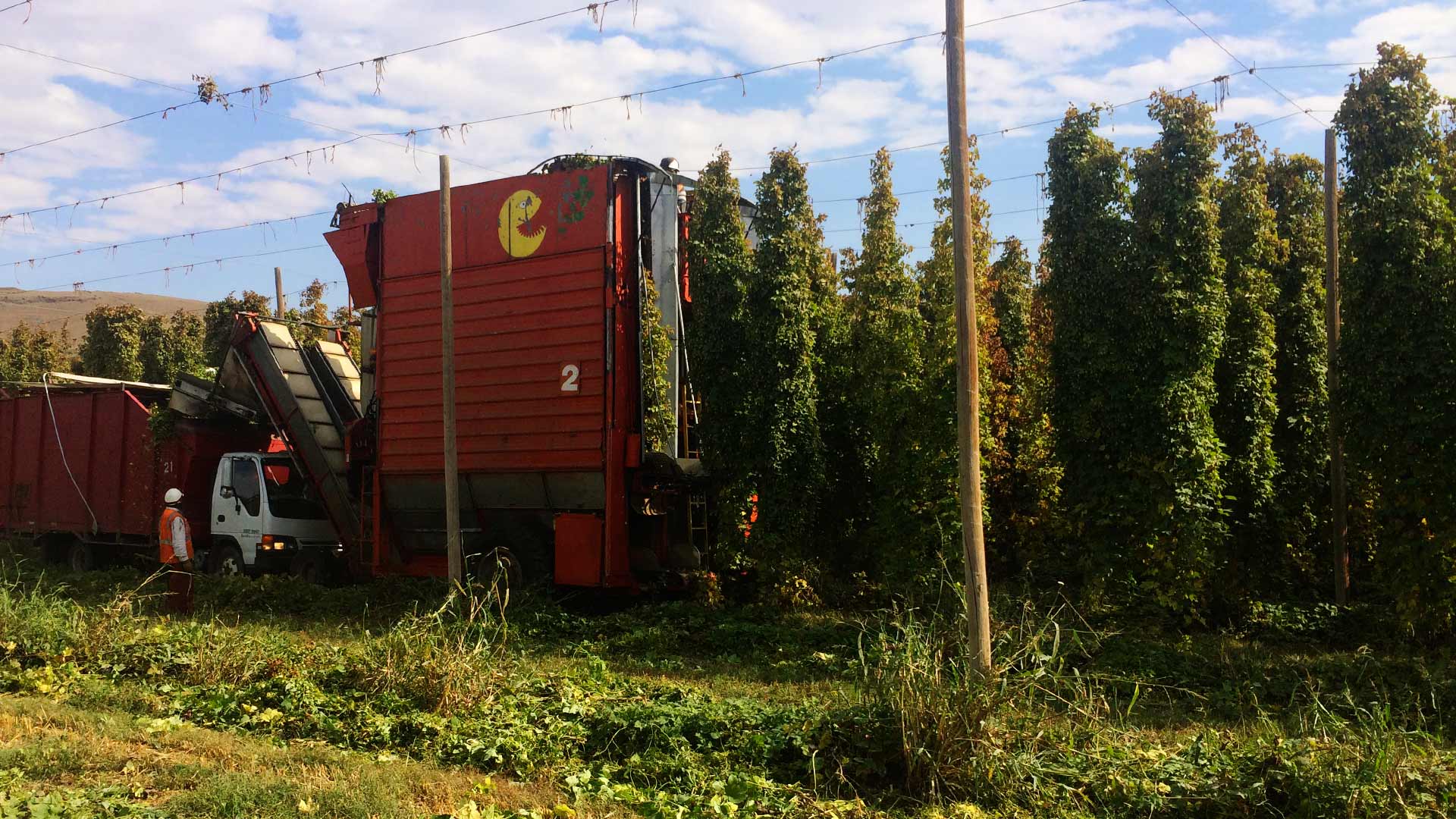
The hops came in the mail this year. This is objectively not as fun as traveling to Yakima for hop selection. Brewers from all over the world arrive in one pretty small town, and you just keep running into each other: on a field tour, dinner, or a bar (never again Lotus Room!). It’s just a fantastic scene, maybe like Cannes for brewers?
But doing hop selection at the brewery provides us with a good opportunity. We can involve more people in the process, since we can’t shut the brewery down and take everyone to Yakima. So while the team isn’t getting the whole Yakima experience, we can at least give everyone the opportunity to get nose deep in some hops and learn some things along the way.

CASCADE HOPS: WHAT WE’RE LOOKING FOR
The first hop we received this year was Cascade, which was great for this first step in the process. We use a lot of Cascade, but we aren’t terribly specific in how we select it. It has to have certain characteristics, but mostly we get to select it on hedonic grounds. That’s because Cascade is never used as a pure focus for a Drake’s beer (unless we make Wandering Possum again).
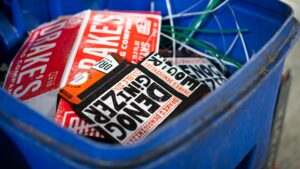
It’s a support hop and lends its character to Denogginizer, Best Coast IPA, 1500, Kick Back IPA, and (maybe surprisingly) Hopocalypse Hazy Double IPA. This reflects the truly foundational level of this hop. It’s really hard to imagine craft brewing without Cascade, and we want them to touch our core hoppy beers.
Since Cascade isn’t a focus hop, I explain to our team that we should pick the one we find most pleasing. If Cascade was a focal hop, perhaps we’d be selecting for a more pine-driven crop, compared to one dominated by citrus or earthy and resinous tones. I suppose in some ways this is a more difficult criterion than either extreme of completely hedonic, verse very specific.
If we were very specifically looking for the most piney/resinous hop, that’s actually kind of easy, and just picking purely subjectively is rather freeing. But we wouldn’t select a Cascade that smelled like mangos and eucalyptus even if we thought it was awesome. It still needs to broadly smell like a “typical” Cascade hop.
A THEORY ABOUT CASCADE HOPS
Cascade hops have been around since 1972, when it was released by the US Department of Agriculture (a useful expenditure of your tax dollars!). It took a while for this hop to catch on before the nascent craft beer movement adopted it, making it one of the more established hops currently grown in the United States.
What this tends to mean in selection is that the hop is rather consistent. With such a (relatively) long history, farmers know a lot about how to grow this hop. I’m also going to introduce a speculative theory as fact. Since the hop has been around so long, it has a well-established root structure that keeps it from varying too much.
Now, that root structure theory might be hooey, but I know a lot of brewers who have observed that some newer hops come out of the gate super-vibrant, and then in a couple of years seem dull. I certainly see more variation when I’m selecting newer varieties. Mosaic selection last year was wild! So I think at minimum this qualifies as “truthy.”
OUR SELECTION
We had four lots of Cascade hops to play with during selection. Per usual, three of them were what I would call “typical” Cascades. A typical Cascade has an aroma familiar to anyone that’s drank a Sierra Nevada Pale Ale. It’s a little bit spicy, a touch earthy, has some citrus, and pine. If I’m feeling particularly florid, I’d say it smells like zesting a grapefruit with pine needles in the middle of the woods. The “outlier” still had those basic aromas, but the spiciness was more prominent, and the hop overall was sharper.
It was fun running the team through these hops. After they rated the four, we discussed what they smelled, and I was happy to see that most people did catch our outlier as different. I love having people smell hops in a really focused way like that and teasing descriptors out of them (special shout out to Vandy and “pesto”). When you’ve been doing this for a while you tend to settle into a vocabulary, so it’s neat to see the words they chose to use.
Unfortunately, after all of that sniffing, we didn’t get to go get hammered on Lotus Specials, which is probably for the best.
Written by John Gillooly, Drake’s Brewmaster